Channapatna has been turning wood and pressing colour onto it for generations. We turned up with jokes about traffic, tokens and ETAs. This page is how those two things meet, and what we promise while they do.
Always turning. Scroll to speed it up. Like the real thing, minus the shavings.
How a gombe is born.
The Channapatna way, in five steps and one leaf. Every Gubbi on this site is made like this, by hand, about 60 km from Bengaluru.
1
Aale mara
Ivory wood. Soft, pale, close-grained, and it takes colour like nothing else. Seasoned for months before anyone touches it.
2
Cut to size
Sawn into blanks roughly the shape of what they will become. A Traffic Kumar starts life as a very boring cylinder.
3
On the lathe
The blank spins, the chisel leans in, and a shape appears in minutes. Learning to do it that fast takes decades.
4
Lac, while it spins
Colour is a stick of lac pressed against the turning wood. Friction melts it on. No paint, no brush, no spray can.
5
Leaf polish
Buffed with a screwpine leaf until it shines. That is the whole finish. Your ajji’s gombe still has it.
Specific is special.
“Nice object” is fine. “That is literally you” is better. Every character starts with a recognisable feeling, a local ritual, an internet habit, or a joke that has lived rent-free in our heads for far too long. If it doesn’t make one particular person in your life go “ayyo”, it doesn’t get made.
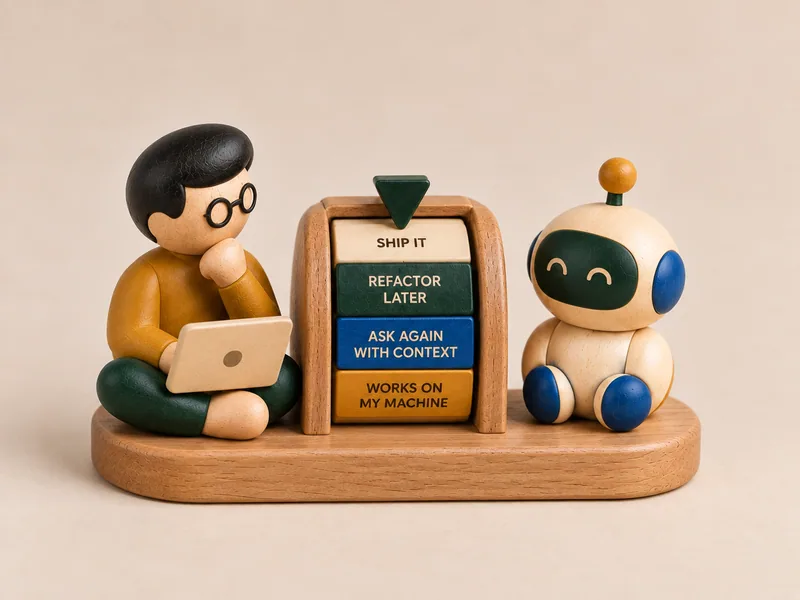
Works on my machine.
Let wood be wood.
The lathe decides a lot. Round things are easy, sharp corners are not, and colour behaves the way lac wants it to. So every shape was worked out with the maker and the material, not forced from a drawing. That is why no two pieces are identical, and why we like it that way.
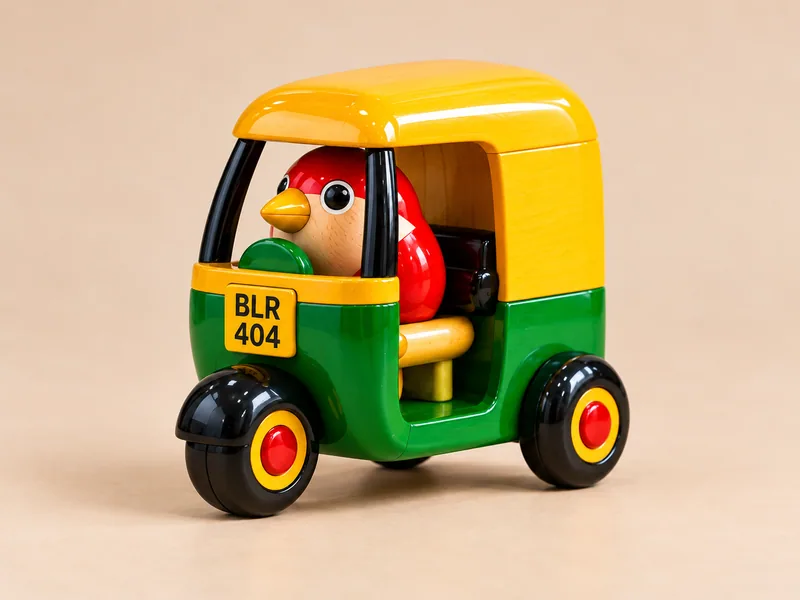
One auto, one gubbi, and enough optimism to take the flyover.Lathe decides
Keep it around.
We want things you move from one desk to the next job, one flat to the next. A story you remember, a surface you want to touch, and a place in the room long after the joke first lands. Nothing here is designed to be unboxed once and forgotten.
Third desk. Same guy.
Say who made it.
Every box carries a made-by card naming the workshop that turned your piece. Fair rates, agreed up front, paid on time; the craft only survives if the people doing it can afford to keep doing it. If you ever want to know more about where your Gubbi came from, ask, and we will tell you.
Hands that have done this for generations.Made by hand
A little room for the sparrow.
Every Gubbi sold puts up one sparrow nest box in Bengaluru. It is built into the price, not added on top. We publish the count and the partner as the boxes go up, so the number on this page is only ever one we can stand behind.